Slab Leak Repair Cost: Repipe vs. Reroute vs. Spot Repair Compared
When a slab leak hits, most homeowners wonder the same thing: "How hard — and how much — is this fix going to be?" That's where we come in. There are three main ways to go after a slab leak: spot repair, rerouting, and whole-home repiping. Each has its own use case, price tag, and level of hassle, so choosing the right one isn't just about stopping a leak — it's about making the smartest long-term move for your home and your budget.
Spot repair sounds simplest: dig to the leak, patch it, and you're done, right? Sometimes, yes. Other times, you're kicking the can down the road if your pipes have seen better days. Rerouting skips the slab entirely by running new lines around the problem, keeping demolition down but changing how your plumbing is laid out. When leaks become frequent or your pipes are corroded throughout, a whole-home repipe might be the only move that finally lets you sleep easy.
So what affects that final price? It isn't just parts and labor — it's how many pipes are compromised, what the restoration takes, and even what your insurance will (or won't) cover. Here in the Fountain Hills and greater Phoenix East Valley area, our caliche-laced, shifting desert soil and monsoon season add a few extra twists. We'll break it down step by step, with real numbers and straight talk, so you can pick the solution that pays off for years, not just days.
This guide cuts through the jargon and gives you the facts, straight from a family-owned team that's worked on East Valley homes since 1989. Let's get you up to speed on your options, so your home — and your wallet — don't take a bigger hit than they have to.
Understanding Slab Leak Repair Options and Costs
Dealing with a slab leak isn't as simple as picking the first fix that comes to mind. Every home is different, and the right approach depends on more than just where the water is coming from. When we boil it down, spot repairs, rerouting, and full repiping each carry their own advantages — and trade-offs — especially when price, hassle, and staying power are on the line.
You may be focused on stopping the water fast, but it's worth understanding how local conditions — like the way our desert soil behaves after a monsoon downpour — and your home's plumbing setup affect your choices. In some cases, a focused spot repair is all you need. Other situations call for more decisive action to protect your investment.
This section sets the stage by showing how the three main slab leak repair options stack up in real-world conditions here in Maricopa County. We'll look at how each choice can affect your ongoing costs, the disruption to your household, and the practical value each method delivers over time.
Whether you're staring down a new leak or trying to get ahead of future headaches, knowing your options — and the factors that drive their cost and effectiveness — means you can make a decision that holds up. This foundation helps you weigh the details in the sections ahead and compare options confidently, with our local Arizona conditions in mind.
What Is a Slab Leak and Why Prompt Repair Matters
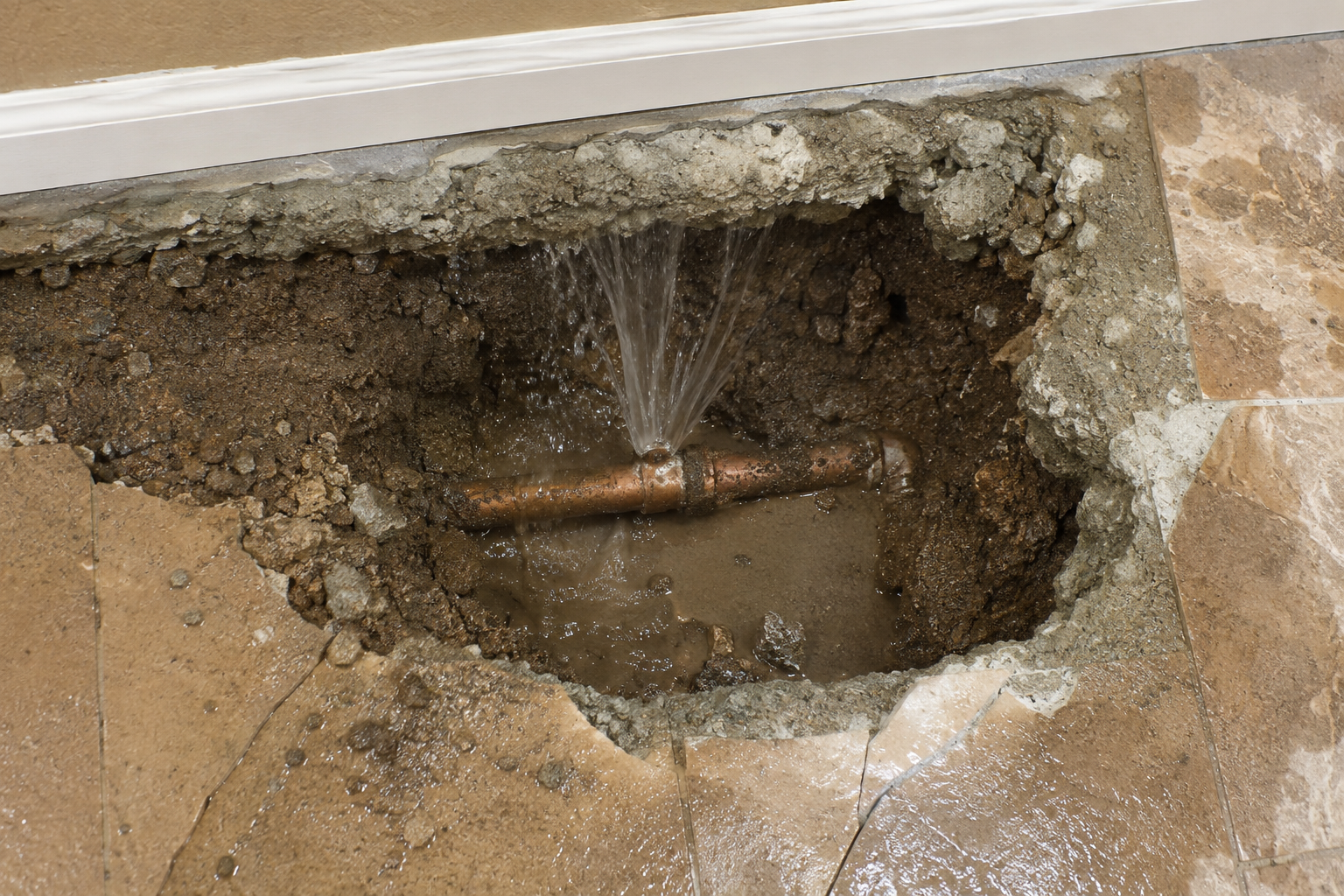
A slab leak happens when a water pipe running beneath your home's concrete foundation develops a hole, crack, or break. These leaks often result from corrosion, shifting soil, poor original installation, or simple age. When water escapes beneath the slab, it doesn't just disappear — it erodes soil, threatens your foundation, and can quietly damage floors and walls.
Ignoring a slab leak can snowball into bigger problems: mold, structural damage, higher water bills, and even disputes with your insurance company. Catching and fixing these leaks promptly protects your property from costlier disasters down the road. That's why we treat slab leak detection as step one in keeping your investment — and your family — safe and dry.
Common Signs and Detection Techniques for Slab Leaks
Slab leaks have a way of sneaking up on homeowners. One minute everything looks normal — the next, you're stepping onto a strangely warm spot on the floor or wondering why your water bill has climbed with no obvious explanation. These leaks rarely announce themselves with a dramatic flood, so watching for subtle signs makes all the difference.
Some common warning signs include unexpectedly low water pressure, a sudden spike in your monthly water bill, or mold, mildew, and unexplained dampness on flooring or baseboards. You might even notice certain areas of your floor feel uncomfortably warm, which can mean heated water is leaking beneath the slab.
Because these pipes are buried deep, finding a slab leak takes more than guesswork. We use modern tools like acoustic listening devices, thermal imaging cameras, and video pipe inspections to pinpoint a leak's exact location without tearing up your entire floor — saving you both money and disruption.
Early detection matters. The sooner a hidden issue is found, the more options you have. Faster leak detection usually means less property damage, a cheaper restoration, and a quicker path back to normal. If something seems off, don't wait for bigger symptoms to appear — modern detection technology gives you a real head start on the problem.
Spot Repair for Slab Leaks: Procedure, Benefits, and Limitations
Spot repair is usually the first fix homeowners hear about when there's a single, clear-cut slab leak. It's exactly what it sounds like: targeting the trouble spot, breaking through the concrete, patching or replacing the pipe, and sealing things back up. If the leak is an isolated incident, this method can save you real money and disruption.
But direct doesn't always mean best or final. Spot repairs have real advantages — they're quick and affordable upfront — but they carry risk if your plumbing system is older or has seen little maintenance. Sometimes patching one hole is just a game of whack-a-mole if corrosion is starting to set in elsewhere in the system.
In this section, we'll cover when spot repair delivers on its promise and where it falls short. You'll see what the process actually looks like, what to weigh before choosing this route, and whether the upfront savings outweigh the risk of recurring leaks or bigger problems later.
By understanding the strengths and limits of spot repair, you'll be better prepared to compare it against rerouting or a full system upgrade. The breakdowns below will help you decide if this quick fix matches your home's situation, or if it's time for a bigger investment.
How the Spot Repair Procedure Works for Under-Slab Leaks
Spot repair starts with precise leak detection so we know exactly where to dig. Once the leak's location is confirmed, we break through the flooring and concrete slab directly above it. From there, the damaged section of pipe is cut out and repaired or replaced with new piping.
After the repair, we restore the floor and concrete as closely as possible to its original condition, though some cosmetic touch-up may still be needed later. Spot repair works best when there's a single, easily accessed leak and the rest of your system is otherwise healthy. It's the fastest fix, but expect some mess and noise during the process.
Spot Repair Benefits and Factors to Consider Before Choosing
- Lower initial cost – Spot repair is generally the most affordable option upfront. You're only paying to fix the immediate problem area, which keeps expenses in check for isolated leaks.
- Quick turnaround – Because the work focuses on one spot, it can often be completed in a day or two, minimizing how long your plumbing is out of commission.
- Less invasive — if you're lucky – Compared to a full home repipe, spot repairs disrupt a smaller area, but you'll still have flooring broken and may face a patchwork finish if restoration isn't handled carefully.
- Best for newer homes or healthy systems – Spot repair makes the most sense when your pipes are otherwise in good shape and corrosion is limited to one location. If the leak signals aging pipes overall, the fix may only buy limited time.
- Potential for future leaks – If corrosion or wear is widespread, another leak could surface soon. That can mean repeat repairs, extra costs, and more disruption down the line.
- Restoration costs add up – The upfront price doesn't always include fixing floors, tile, or carpet. Restoration can sometimes cost nearly as much as the repair itself, especially with custom finishes.
- Insurance implications – Insurers tend to cover emergency spot repairs fairly readily, but repeated claims on the same pipe system can raise deductibles or lead to exclusions later.
- Impact on home value – A single patched section usually isn't a dealbreaker, but multiple spot repairs or visible floor patches can raise questions during a home sale or appraisal.
Weigh these factors carefully. If your plumbing shows more than one sign of trouble, or your home is older with galvanized or cast iron pipe, spot repair can turn into a costly cycle instead of a lasting fix. The right call depends on your system's overall health and your tolerance for future risk or restoration hassle.
Typical Costs Associated with Spot Repair
Spot repairs for slab leaks in the Phoenix East Valley generally range from $1,200 to $4,000, depending on depth, leak location, and flooring type. Labor makes up a big share of that cost, especially when accessing reinforced concrete or premium flooring.
Extra costs can appear quickly: restoring concrete, tile, or wood flooring typically adds another $500 to $2,500. A meaningful share of local slab leaks get spot-repaired as a first response, but repeat leaks drive costs higher over the years. The cheapest method upfront isn't always the best bet if corrosion is widespread or if restoration takes a visible toll on your home.
Pipe Rerouting as a Strategic Alternative to Slab Repair
Pipe rerouting is the "choose your own path" option when a traditional spot repair doesn't promise a lasting fix. Instead of breaking up slab after slab, rerouting means running new pipe along walls or through ceilings, avoiding the problem pipe beneath your foundation entirely. For many homeowners, that can mean less mess, faster repairs, and better long-term results when the existing path is simply too risky to keep patching.
This solution really shines here in Arizona, where our expansive and collapsing desert soils — along with dramatic wet-dry swings during monsoon season — put ongoing stress on pipes running under slab. Instead of digging up your floors every time the ground shifts or another section corrodes, you get a fresh run of pipe, often modern PEX or copper, routed away from the trouble below your foundation.
Of course, it isn't the right fit for every property. Some homes can't easily accommodate new pipe runs through walls, and if multiple lines have failed, rerouting costs can approach those of a whole-home repipe. Here, we'll cover what makes rerouting such a common "middle ground" solution, and where it excels or falls short. We'll also walk through when this approach checks all the boxes — and when you need a bigger, longer-term fix for recurring slab leaks.
Steps for Pipe Rerouting and Cases Where It Excels
- Assessment of pipe layout – We start by mapping out your current plumbing system and the leak's location. This determines whether rerouting is possible and where new pipe should go.
- Strategically planning the reroute – Next, we choose the best path for new pipe, usually through walls, attics, or ceilings, keeping the new line clear of disruptive soil or slab conditions.
- Minimal demolition work – Rerouting limits the need to break up the slab. Instead, we cut small access points in walls or ceilings, sparing your floors and foundation from major repair.
- Bypassing the damaged section – New PEX or copper lines carry water around the problem area. Once connected, the old, leaking pipe beneath the slab is abandoned or sealed.
- Faster fix, less mess – Compared to jackhammering concrete, rerouting can save money and restoration work by keeping disruption above the slab, not in it.
- Ideal for hard-to-access leaks – In homes where the leak sits in a tight spot or beneath finished flooring that's costly to restore, rerouting offers a clean workaround.
- A strong fit for Arizona's expansive soil – When your home rests on ground that shifts with the seasons, rerouting avoids repeated slab breakage and the risk of new foundation-linked leaks.
This approach keeps your home livable, minimizes mess, and can offer real peace of mind if your slab's location or our region's soil conditions make repeated spot repairs too risky. Rerouting is especially appealing for homes where the pipe material itself isn't failing everywhere, but the specific under-slab route is a persistent weak point.
When Pipe Rerouting Falls Short and Other Repair Paths to Consider
- Multiple leaks or failing pipes – Rerouting loses its advantage if you're dealing with widespread corrosion or leaks in several locations. In these cases, repiping the home is usually more cost-effective and longer-lasting.
- Major accessibility challenges – If your home's design, high ceilings, or thick walls make new pipe runs difficult or unsightly, rerouting can quickly add labor hours and cost.
- Higher upfront cost than spot repair – While less invasive, rerouting can cost more than a spot fix for just one or two isolated leaks.
- Structural constraints – Some homes simply can't support new pipe routes without major construction or a real hit to their finished look.
- Material mismatches – Tying modern PEX or copper into old, corroded galvanized or cast iron pipe can create future compatibility or corrosion issues.
If your system's overall health is questionable, or you'd rather not risk another patchwork fix, moving to a repipe can be the smarter, safer investment long-term. Use these limitations as a gut check before committing to a reroute, to make sure it's the right fit for your specific leak and property.
Whole-Home Repipe: A Permanent Solution for Aging or Corroded Systems
If your home feels like it's playing "leak lottery" every few years, a whole-home repipe is the reset button your plumbing system needs. This is the all-in option: swapping every water pipe in your house for new lines built to last for decades. No more chasing leaks or crossing your fingers after every slab repair.
Whole-home repiping is often the right call for older homes with galvanized, cast iron, or otherwise failing pipe. It's a bigger project with a higher upfront cost, but in exchange, you get peace of mind and protection from future water damage. Modern PEX and copper resist corrosion far better than their older counterparts, and they hold up well against the ground movement common in our region's expansive and collapsing soils.
If you've noticed a pattern of leaks, discolored water, or your insurance company getting twitchy about your plumbing claims, repiping puts an end to patchwork repairs and rising restoration bills. Below, we lay out why repiping might be the smartest move for East Valley homes hounded by repeated slab leaks, and how it pays off over the long run. You'll see what to expect from the process, and why making the investment sooner rather than later can save you more than just money.
How the Repiping Process Works and When It Makes Sense
Repiping means removing or abandoning the existing water lines and installing new ones throughout your home. We use durable materials like PEX or copper, which are far less prone to corrosion or leaks. This approach is ideal for homes with multiple leaks, aging or brittle pipe, or a history of repeated slab leak headaches.
It's a comprehensive fix — giving you upgraded water lines, more reliable water pressure, and a future with less ongoing maintenance. If your home was built before the 1980s or leaks have become a recurring theme, repiping delivers a lasting solution instead of another temporary patch.
Repiping Costs and Long-Term Benefits for East Valley Homes
The upfront cost for a whole-home repipe in the Fountain Hills and greater Phoenix East Valley area typically ranges from $8,000 to $25,000, varying by home size, pipe layout, material choice (PEX is generally more affordable than copper), and how much restoration is needed once walls are opened up. Labor and local permit fees make up a substantial share of that investment.
Homeowners who've dealt with frequent leaks often save significant money over ten years or more by repiping once, compared to paying for repeated patch jobs and the water damage that comes with them. Insurance companies may also favor a full repipe, since an updated plumbing system represents a lower ongoing risk.
A repipe is a smart long-term choice for our climate too — new PEX and copper pipe cuts down on the chronic water waste caused by undetected slab leaks, which helps both your utility bills and your household's water use. Buyers evaluating your home also get peace of mind from a documented, professionally upgraded system, which can support both resale value and buyer confidence. For Arizona's soil conditions, a repipe is often the decision that pays you back in comfort and fewer plumbing calls for years to come.
Comparing Slab Leak Spot Repair, Rerouting, and Whole-Home Repipe
When all three slab leak repair options are on the table, it can feel like comparing apples, oranges, and bananas. But it's worth laying things out side by side: every method has its own balance of cost, repair speed, household disruption, and how long it holds up before you're back at square one.
This section gives you what you need to put each option under the microscope. We'll cover what each repair really means for your daily routine, your home's future value, and your ongoing insurance costs — the details that matter now and years down the road.
By the end, you'll be able to line up your own home's needs — pipe age, foundation condition, or plans to sell — against each repair path. We'll also walk through what to expect during the work itself, so you can choose the option that matches your risk tolerance and budget.
Project Timeline Comparison and Property Disruption
Spot Repair
- Timeline: Quickest option — repairs are often handled in one to two days, depending on access and flooring.
- Disruption: High in the immediate area — expect dust, noise, and sometimes a temporary water shutoff to the affected section. Flooring is broken up, so restoration follows the repair.
- Restoration: Often adds extra days or weeks for full cosmetic repair, especially with specialty flooring or finishes.
Pipe Rerouting
- Timeline: One to three days for most jobs, longer if the reroute path is complex.
- Disruption: Moderate to high, but usually limited to small wall or ceiling cuts. The slab stays undisturbed, which is a real win for homes with premium flooring.
- Restoration: Usually involves patching drywall and repainting rather than slab or flooring reconstruction, so recovery is faster.
Whole-Home Repipe
- Timeline: The largest commitment — expect one to two weeks for a mid-sized home, longer for larger or more complex layouts.
- Disruption: High throughout the home; walls, ceilings, and occasionally floors are opened to route new pipe. Some areas may lose water temporarily.
- Restoration: All affected areas are put back together, but the end result is essentially a fresh start for your home's plumbing.
Spot repair and rerouting get you back to normal fastest, but the scope of disruption — especially cosmetic — can vary widely between the two. Repiping takes longer but eliminates the repeat cycle of demolition and disorder. Set expectations with us up front so you know what your schedule and household should prepare for.
Calculating the True Costs: Immediate and Long-Term for Each Repair Choice
Spot Repair
- Immediate cost: Cheapest upfront ($1,200–$4,000 typical in our service area).
- Hidden costs: Restoration (floor patching, refinishing), repeated repairs if more leaks appear, potential insurance friction after multiple claims.
- Long-term risk: Costs can add up over time, especially in older homes or where corrosion is already established.
- Insurance: Emergency spot repairs are typically covered, but frequent claims may raise premiums or lead to exclusions.
- Resale: Multiple visible repairs or disclosed recurring leaks can affect buyer confidence and appraisal value.
Pipe Rerouting
- Immediate cost: Moderate to high ($2,500–$7,500+), depending on route complexity and material.
- Hidden costs: Drywall repair, temporary water shutdowns, and occasionally a second reroute if more leaks surface elsewhere.
- Long-term risk: Lower than spot repair, though some risk remains if corrosion continues in other older pipe.
- Insurance: Sometimes favored for avoiding repeated slab damage, but thorough documentation matters for future claims.
- Resale: Generally viewed better than patchwork spot repairs, though rerouted plumbing should still be disclosed during a sale.
Whole-Home Repipe
- Immediate cost: Highest upfront ($8,000–$25,000, depending on size and setup).
- Hidden costs: Temporary housing needs if a water shutoff runs long, plus full restoration of walls, ceilings, and sometimes floors.
- Long-term risk: Lowest overall — new pipe means future leaks are far less likely for decades.
- Insurance: Can help lower premiums and smooth future claims, since insurers often view repiped homes as lower risk.
- Resale: A genuine selling point — buyers and appraisers tend to see a documented repipe with warranty coverage as a premium feature.
When you tally the real cost, always factor in how likely future leaks are, the chance of repeat insurance friction, and how visible repairs could affect value at resale. A higher upfront investment can pay off substantially in peace of mind, lower water waste, and a smoother home sale down the line.
Key Factors for Making Your Slab Leak Repair Decision
- Age and material of plumbing – If your pipes are old, galvanized, or showing signs of system-wide corrosion, a full repipe is the safer bet. For newer, healthy pipe, spot repair or rerouting may be enough.
- Location and severity of the leak – An easy-to-reach, isolated leak is a good candidate for spot repair, while hard-to-access or recurring leaks often make reroute or repipe the more cost-effective long-term call.
- Soil conditions – Homes on Arizona's expansive and collapsing soils benefit more from rerouting or repiping, since ground movement makes future slab leaks likely if you stick with repeated spot repairs.
- Budget and insurance – Factor in both your upfront cash flow and possible insurance support. A larger investment now may be easier to manage than ongoing out-of-pocket repairs and rising premiums later.
- Plans for your home – Staying long-term? Prioritize durability with a reroute or repipe. Selling soon? Cost-effective, well-documented repairs with clear disclosure can help protect resale value.
If you're unsure which way to go, get an honest assessment from a trusted local team that knows the East Valley's soil and housing stock. Don't default to the easiest answer — think about the years ahead, not just today.
Advanced Leak Detection Technologies and Preventive Strategies
Technology makes slab leak repair smarter than ever. Gone are the days of guesswork and tearing up half your home on a hunch. Today's leak detection equipment and minimally invasive trenchless repair options let us diagnose and fix leaks with precision, saving you money and sparing your home from unnecessary demolition.
In this section, we'll walk through the modern tools that make slab leak detection fast, accurate, and non-destructive. You'll also learn how trenchless repair methods can fix under-slab pipe with minimal disruption, often meaning a shorter repair timeline, a cleaner finish, and lower restoration costs.
Staying ahead of the problem is half the battle, especially given the soil movement and monsoon-driven moisture swings we deal with here. That's why we've also included practical advice for keeping your pipes in good shape: regular inspection routines, managing water pressure, and accounting for what Arizona's soil can put your plumbing through. Investing in prevention and using the right detection tools goes a long way toward avoiding a bigger bill down the road.
Modern Slab Leak Detection and Trenchless Repair Techniques
- Acoustic listening devices – We use sensitive microphones and sound amplifiers to "hear" leaks through concrete, zeroing in on their location without any drilling.
- Thermal imaging cameras – These pick up heat signatures from warm water leaks beneath floors, revealing cold or hot spots instantly and helping direct a precise repair.
- Video camera pipe inspections – Small waterproof cameras travel through pipe, providing real-time visuals of damage, cracked joints, and hidden corrosion, so there's no guesswork.
- Trenchless CIPP lining – Cured-in-place pipe (CIPP) lining creates a new pipe within the old one, with no slab cutting required — just durability and a faster turnaround.
- Pipe bursting technique – For severe damage, pipe bursting pulls a new pipe through the old line, breaking apart the failing pipe and replacing it in one pass, again reducing demolition.
These technologies mean less mess, lower labor time, and faster solutions. Homeowners throughout Fountain Hills, Scottsdale, Gilbert, and Mesa benefit from these tools by preserving their home's finishes, limiting restoration expenses, and improving detection accuracy when the slab is in the way.
Preventive Maintenance Strategies to Avoid Costly Future Slab Leaks
- Regular plumbing inspections – Have a professional walk your system every year or two, using moisture meters and cameras to catch leaks before they become disasters.
- Quick repairs on small leaks – Don't delay fixing minor leaks; water under the slab is bad news even in small amounts. Fast action prevents bigger bills later.
- Monitor water pressure – High water pressure wears out plumbing faster. A pressure regulator can reduce stress on your system if it's running hot.
- Manage foundation moisture – Keep soil moisture around your foundation as consistent as possible to minimize the shifting that stresses and cracks pipe beneath your slab.
- Upgrade older pipe materials – If you have old galvanized or steel pipe, plan to replace it before leaks start. Modern materials resist corrosion and hold up far better against our region's soil and climate.
Preventive maintenance isn't glamorous, but it's far cheaper than a slab leak repair or a full restoration. Taking control early protects both your pipes and your budget.
Local Arizona Factors and Choosing the Right Provider
You can't talk slab leaks in the East Valley without talking about our soil. Much of central Arizona sits on expansive and collapsing soils, often layered with caliche — a hard, calcium-carbonate-cemented layer that can be several feet thick. Add the dramatic wet-dry swings of monsoon season, and you get ground that shrinks, swells, and settles in ways that put real stress on pipe running beneath a slab. That's why it's not just the fix that matters, but who you trust to handle it.
This section covers why local experience is essential for slab leak repair, especially in a region where shifting ground, aging homes, and seasonal monsoon moisture rewrite the playbook every year. A plumber who understands East Valley soil conditions — and has years working in these neighborhoods — brings insight that out-of-town crews simply don't have.
As we'll cover below, choosing a provider isn't only about price or speed. You want to know about their licensing, insurance, and willingness to stand behind their work with a solid warranty. Clear communication, fair pricing, and strong reviews from fellow Arizona homeowners can make a real difference when stress levels are high. Here's what to look for, and why going with an established, family-owned team pays off at repair time.
Arizona's Challenging Soil: Increased Slab Leak Risk Explained
The East Valley's foundation challenges start with the ground itself. Much of the region sits on expansive and collapsing soils, and many areas also have caliche layers that don't drain or shift the way typical soil does. These soils expand when wet — especially during monsoon storms — and contract as they dry, moving with every seasonal swing. That back-and-forth puts ongoing pressure on pipe buried in or beneath the slab. The result: pipe bends, cracks, or disconnects, especially older, rigid materials like cast iron or galvanized steel.
This region-specific challenge means slab leaks here are more frequent and trickier to repair correctly than in areas with more stable ground. That's why East Valley homeowners need repair options and plumbing expertise tailored to local conditions, not generic solutions that ignore the underlying cause. Local know-how is the difference between a fix that lasts and one that doesn't.
How to Choose an Arizona Plumbing Company for Slab Leak Repair
- Confirm licensing and insurance – Make sure the plumber holds current Arizona licensing and carries liability insurance. This protects you if something doesn't go as planned and keeps unqualified workers out of your home.
- Ask about experience with local soil – Don't hesitate to ask, "How many slab leak repairs have you handled in homes around here?" Local experts understand the quirks of East Valley soil, foundation types, and common plumbing pitfalls.
- Check service warranties – A strong warranty on both parts and labor is a sign of confidence. Look for a company that backs its leak repairs, reroutes, and repipes with meaningful coverage — we stand behind our work with a three-year warranty on labor and workmanship.
- Understand financing and transparent pricing – A reliable company is upfront about pricing and offers flexible options. A free, detailed estimate with no surprise fees should come before any work begins.
- Review customer testimonials – Word of mouth goes a long way here. Look for a family-owned business with loyal repeat customers and strong marks for communication, timeliness, and after-service care.
- Expect personalized service – A local, background-checked team is more likely to provide tailored recommendations, regular updates, and custom solutions, especially for unusual floor plans or tricky foundations.
The right provider makes the whole process smoother and stands behind their work long after the repair is done. Trust experience and reputation, not just a flashy ad or the lowest quote. East Valley homes need more than a quick fix — they need a repair built to hold up against our local soil conditions.
Ready to Get Your Slab Leak Assessed?
If you're seeing warning signs of a slab leak — or you just want a straight answer on whether spot repair, rerouting, or a full repipe makes sense for your home — we're here to help. Our background-checked, licensed, and insured technicians serve Fountain Hills, Scottsdale, Gilbert, and Mesa with same-day service and a three-year warranty on all labor and workmanship.
Request service today or call us at (480) 906-4236 If you're dealing with an active leak and need help right away, our
emergency plumbing team is ready to respond. You can also
learn more about our family-owned team and why East Valley homeowners have trusted us since 1989.
Matt Howard